“What’s your proudest self-discovery moment during exam prep?”
Here is what 20 thought leaders had to say.

Getting my master’s in counseling changed how I see problems at work. I’d be reading a case study and suddenly get it. The way people feel can actually direct how a company changes its rules. For tough situations, there’s nothing better than combining that gut-level understanding with how things are supposed to run. I always tell people to try it, it just makes everything work better.

Aja Chavez, Executive Director, Mission Prep Healthcare
Preparing for my chemical engineering exams, my biggest takeaway was seeing how everything connects. Linking a chemistry concept to a math formula suddenly made the problems less intimidating. I do the same thing now in my business work, seeing marketing and engineering as one system. That way of thinking helps a lot outside the classroom, too.
During exam prep, I had this moment where I realized I study the same way I do SEO audits. I started breaking down each subject like a website audit, step by step. Suddenly, all those complex theories weren’t so scary anymore. My confidence actually went up. If you’re stuck on something hard, try mapping it out like you would a project plan. It works.

Ankit Prajapati, eCommrce SEO Consultant, Consultant Ankit
My proudest self-discovery moment during exam prep came when I realized how strongly I rely on structured creativity to stay focused. At Mad Mind Studios, I’m constantly balancing strategy with storytelling, but I didn’t expect that same blend to help me study more effectively. One day, while overwhelmed by dense material, I broke everything into visual mind maps, color-coded themes, simple icons, and short narrative-style summaries. Suddenly, the information clicked.
That’s when I realized that my brain uses clarity and design, not repetition, to process complexity. Not only did it make studying easier, but it also served as a reminder that creativity is a strength rather than a diversion. Since then, I’ve used this strategy for everything from internal communication to campaign planning, and it has really improved my confidence and workflow.

Benito Recana, Growth & Communications Lead, Mad Mind Studios
The most important self-realization during exam preparation occurred long before building LAXcar. I understood that I do my best work when I stop doing the ‘cramming’ and instead develop my own system. Once I finally accepted the fact that I learn differently, at a slower pace than most, but much more in-depth, my whole perspective on every obstacle, including running a business, changed.
Studying for one major finance exam left a huge impression on me. I was feeling the weight of the world on my shoulders, but then I learned to break down the information into small, simple blocks. I learned that I was not bad under pressure; I just needed a framework.
I have this in mind at LAXcar, and I still slow down, organize, and move on one step at a time to tackle big problems or last-minute challenges. That exam experience was beneficial in many more ways than just helping me pass.

Arsen Misakyan, CEO and Founder, LAXcar
During my Senior Professional in Human Resources (SPHR) prep, I discovered my brain rejects rote memorization in favor of narrative application. I spent weeks attempting to drill labor laws with flashcards, but the data would not stick. The breakthrough arrived when I began treating every practice question as a live consultation with a difficult CEO.
I realized I don’t learn by storing facts. I learn by solving problems. Instead of studying to pass a test, I studied to advise a future client. This perspective turned anxiety into a practical strategy, allowing me to absorb complex regulations because I immediately gave them a real-world purpose.

AJ Mizes, CEO and Founder, The Human Reach
During an intense study week, I noticed a particular craving hit me… It was for a snack I never eat.
The first time it happened, I thought it was stress.
Later, I realized it wasn’t stress at all. It was boredom creeping in.
My brain used that craving as a little alarm that whispered, “You’re pretending to study again.”
Once I understood that signal, I stopped fighting it. I would swap topics immediately, and the boredom vanished like someone flipped a switch.
That discovery helped me sharpen my instincts and stop wasting precious hours stuck in unproductive loops. It felt like unlocking a tiny cheat code for my own attention span.
During a heavy exam stretch, I realized my brain doesn’t unlock its best thinking while I’m sitting still. I kept rereading the same lines with zero progress, then walked to the kitchen to clear my head. The moment I started pacing around and talking through the material out loud, everything clicked. It felt like tuning into a hidden frequency that only turns on when I’m moving.
That discovery changed how I study. Instead of chaining myself to a desk, I let my thoughts travel with me. Strange as it sounds, I think clearly when I treat studying like a walking conversation, almost like I’m hosting a one-person podcast in my own apartment.

Paul McKee, Founder, ReadingDuck
I made progress when I stopped putting off my hardest subjects and started working on them first thing every day. I always put off hard things until later, when I was already weary and angry. One semester, I made myself study statistics, which was my worst subject, every morning when I was up and alert.
In two weeks, statistics wasn’t any harder than the other topics. I was already mentally tired when I started to think about it. This was true for anything that was hard for me. I made subjects I didn’t like into ones I could handle by changing my study schedule such that I worked on hard stuff when I had the most energy. This one tweak to my schedule helped my grades more than any other study method I had tried before.

Phoebe Mendez, Marketing Manager, Morse Code Translator
I kept rereading the same paragraph, as if it would unlock a secret, yet the meaning blurred more each time.
At first, I blamed tired eyes, but then it hit me… my brain had slipped into fake productivity mode.
My eyes were working, my mind wasn’t. That tiny realization annoyed me and fascinated me at the same time.
So I paused and asked myself a simple question: what new idea am I actually trying to absorb right now?
That question snapped me out of the trance immediately. It felt like spotting a hidden switch in my own mind. I started seeing how often I drifted into autopilot without noticing.
From then forward, I caught those loops faster, redirected myself quicker, and saved a surprising amount of study time. That moment taught me that my focus needed steering, not force.

James Robbins, Co-founder & Editor in Chief, Employer Branding News
Physiology nearly broke me, so I tried something that made zero sense at first. I started explaining chapters out loud to my houseplants. The silence helped me hear the gaps in my knowledge, and the strange ritual turned into a full routine where I would pace around my tiny room lecturing a fern. The surprising part was how fast I absorbed information.
That experience opened my eyes to something about myself. I learn best when I verbalize ideas freely, without worrying about someone judging my pauses or confused expressions. It taught me that I’m a social learner, even when the audience is green, leafy, and half-dehydrated.

Ryan Beattie, Director of Business Development, UK SARMs
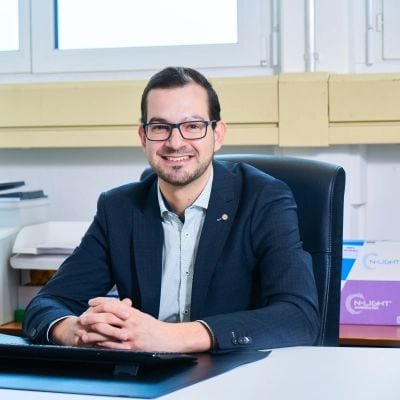
This was during my PhD exams, and I had spent far too many hours staring at a dataset that wouldn’t cooperate. The formulas wouldn’t align with the lab data, and it was very frustrating for me because I felt like I was missing something. And I’m glad that pushed me to look at the situation through all these different possibilities. And that’s when I finally took raw swab data and plotted the reaction rates against those real temperatures.
It sounds like an oversimplification, but it showed me how to adapt tools to fit real variability, instead of being too rigid with textbook formulas. Because it’s a mindset that a lot of us get stuck in. We cling too tightly to standard methods because they’re tried and tested, but that could also push you to miss out on answers.
Mario Hupfeld, CTO and Co-Founder, NEMIS Technologies
One evening, I noticed I had started assigning colors to different parts of my notes based on the mood I wished I had while reading them. Cool colors for sections that needed calm focus, bright colors for confusing material, and a goofy shade for anything that stressed me out.
What surprised me was how instantly my focus sharpened. The colors weren’t just decoration. They changed the emotional tone of the material in a way that helped me stay steady. I had never seen myself as a visual learner, yet that moment showed me my mind reacts strongly to color-coded cues. It felt like discovering a secret switch that made everything easier to process.
I figured out the most important thing while studying for my certification exams and launching my first real estate company at the same time. Just showing up every day, even on the bad ones, worked better than any study trick. Those small, steady efforts are what actually move you forward. It’s not some grand plan, just the daily work.

Ryan Dosenberry, CEO, Crushing REI
I found my motivation shot up when I connected studying to my actual future job. While prepping for my digital marketing certification, I wrote case studies about companies I admire. Suddenly, it wasn’t a chore; it felt like practicing my skills ahead of time. You should try this. It helps the material stick and keeps you interested instead of just grinding through it.

Yoan Amselem, Managing Director, German Cultural Association of Hong Kong
I was failing my biomedicine exam because I was just trying to memorize everything. Then I stopped using flashcards and started drawing a big picture of how all the parts connected. Suddenly, the facts just stuck in my head. That’s when I got it, understanding how things work is so much easier than just knowing what they are.

Max Marchione, Co-Founder, Superpower
My proudest moment of self-discovery happened while I was preparing for CISSP. In my case, it was the understanding that I am really much more effective when I cease chasing the “perfect understanding” and concentrate on the ability to explain the topic in a simple way, like talking to a board of directors. Consequently, I had transitioned from the memorization of facts to the internalization of the concepts in a common language through teaching to myself. It was at that moment when everything became clear to me – I was able to see the domains in connection with my actual daily life decisions. It was also then that I learned that my forte is not cramming but the transformation of the “complexity – clear, actionable thinking” process.

Mark Pagdin, Founder | Chief Information Security Officer, Onion Security
I found the best way to study for exams was to teach someone else. Back in college, I’d run study groups and had to break down complex concepts step by step. That material stuck in my brain like nothing else ever did. If you’re stuck on something, try explaining it to a friend. You’ll find the holes in your knowledge right away.

Pepe Breton, Founder, Flyhi
I used to think staying calm under pressure was something you were born with, but studying for exams proved me wrong. I had to get my schedule in order and actually ask people for help. Now, when I’m counseling others, I tell them the same thing. When it feels like too much, break it down and lean on your people. That’s what works.
One of my most jubilant self-discovery revelations in exam prep was finding what I learned best with. I was always trying to learn the same way as my friends, but I could never keep information in my head and get through exams. Through a process of elimination, I found those to be visual aids (mindmaps, flashcards, etc). It didn’t just keep me from failing tests, but built my confidence in the now of studying and learning in general. It taught me about the value of knowing your strengths and weaknesses academically. And that was when I changed my studying habits to suit myself, and in the end, I got better results with the feeling of being productive.

Pavel Khaykin, Founder & SEO Consultant, Pasha Digital Solutions