Anatomy vs. physiology: Key differences and why they matter
neilkathuria168
September 2, 2025
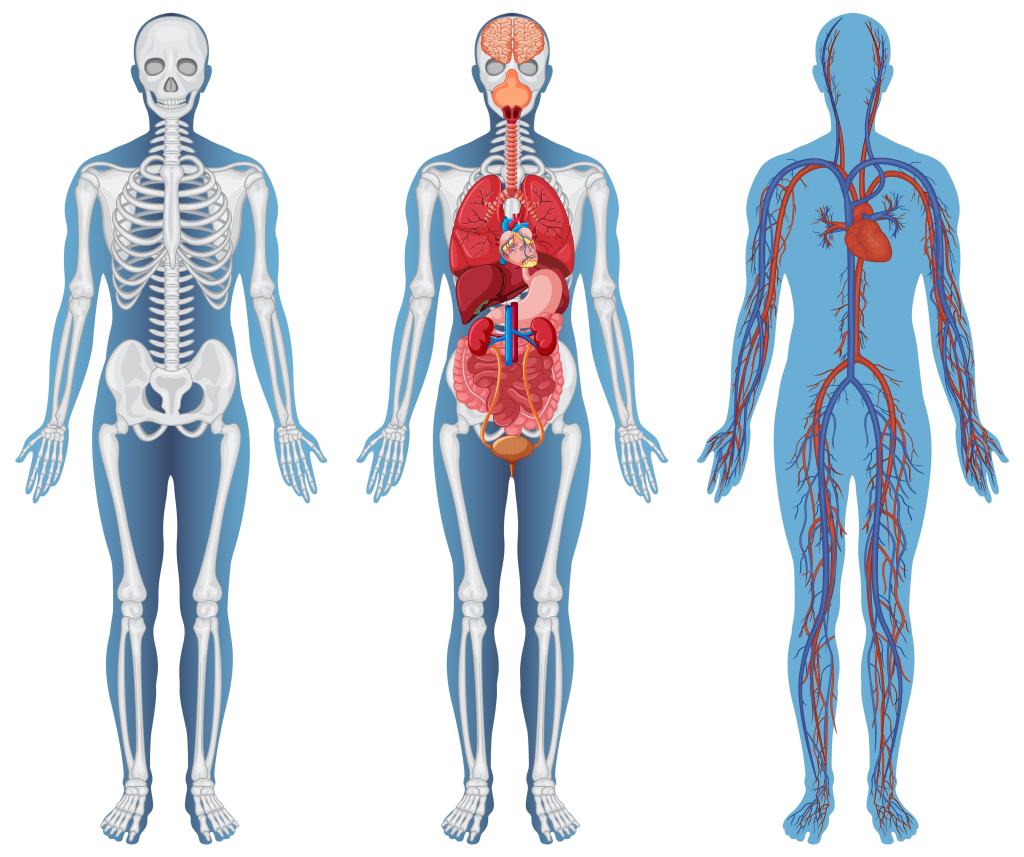
Anatomy and physiology are foundational disciplines in healthcare, biology, and medical education. While the two are often taught together, they describe differentbut interconnectedaspects of the human body. Anatomy explains the structure. Physiology explains the function. Understanding both is essential for anyone studying the human body or working in a health-related field.
Anatomy is the branch of science concerned with the structure of living organisms, including their systems, organs, tissues, and cells. It focuses on what body parts are called, where they are located, and how they are organized.
Branches of anatomy
Gross anatomy: The study of large body structures visible without a microscope, such as bones, muscles, and organs
Microscopic anatomy: The study of cells (cytology) and tissues (histology) under magnification
Developmental anatomy: The study of structural changes over time, including embryonic and fetal development
Etymology
The word anatomy comes from the Greek word anatome, meaning “to cut open,” referring to early studies that involved dissection to observe internal structures.
What is physiology?
Physiology is the branch of biology that deals with the functions and processes of living organisms. It explores how organs and systems work together to maintain life.
Branches of physiology
Human physiology: The study of how the human body functions
Comparative physiology: How different species perform similar functions
Cellular and molecular physiology: The chemical and cellular mechanisms behind biological processes
Etymology
The word physiology comes from the Greek physis(nature) and logia (study), meaning “the study of nature” or “how things work.”
Key differences between anatomy and physiology
While anatomy and physiology are interconnected, their approaches and purposes are distinct.
Feature
Anatomy
Physiology
Focus
Structure
Function
Method of study
Dissection, observation, imaging
Experimentation, testing, monitoring
Tools used
Microscopes, models, medical imaging
Lab equipment, sensors, simulation
Examples
Location of the lungs, number of heart chambers
How the lungs exchange gases, how the heart beats
Anatomy provides the physical map of the body. Physiology explains how that map operates.
How anatomy and physiology work together
Structure and function are inherently connected. A structure’s form determines its function, and its function may influence how it is shaped or supported.
Examples of structure–function relationships
Lungs: Their structure includes millions of tiny alveoli, which create a large surface area for efficient gas exchange
Muscles: Their long, fibrous cells are organized to allow contraction and movement
Neurons: Their unique shape, with long axons and branching dendrites, allows for fast communication across the nervous system
Without understanding the physical form (anatomy), it is difficult to grasp how processes like breathing or digestion occur (physiology).
Why anatomy and physiology are important
Applications in healthcare
Doctors, nurses, therapists, and other medical professionals rely on both anatomy and physiology in their daily work.
Diagnosis: Anatomy helps locate abnormalities, while physiology identifies how functions have been disrupted
Treatment: Understanding structure guides surgeries and imaging, while understanding function guides medication and rehabilitation
Patient education: Explaining health conditions requires knowledge of both what the body part is and how it works
Applications in education and fitness
Educators use anatomy and physiology to train future healthcare workers
Athletic trainers and sports scientists apply both fields to improve physical performance and prevent injuries
Researchers depend on anatomy and physiology to develop new medical technologies and treatments
Careers that involve anatomy and physiology
Professionals across several industries rely on both disciplines:
While memorizing structures is part of the field, understanding spatial relationships and clinical relevance is just as important.
“Physiology is only about fitness.”
Physiology covers every system in the body, from cardiovascular and respiratory function to hormonal regulation and neural activity.
“You can study one without the other.”
In practice, both must be understood together. You cannot fully grasp how the body works without knowing what it is made of.
Real-life applications
In real-world settings, the two fields work together to help professionals:
Interpret X-rays and scans
Understand lab values and vital signs
Choose appropriate treatments
Explain disease processes to patients
Design medical devices and software
Whether managing chronic conditions or conducting research, a combined knowledge of structure and function is required.
Conclusion
Anatomy and physiology describe two fundamental ways of understanding the human body. Anatomy identifies what and where things are. Physiology explains how those parts work. Together, they give usthe complete picture of life in motion. Whether you are entering the healthcare field or simply learning how your body functions, both disciplines offer essential insights into how we live, move, and survive.